The Weight of Gold
The Weight of Gold was created in 2 weeks for Pirate Software Jam 15. I did this jam with a group of 5 people. I took on a managerial role, leading the creative vision of the game and designing a wide array of gameplay mechanics, as well as enabling artists and implementing their creations into the engine.
My Contributions
Level Design
The level is procedurally generated using a Wave Function Collapse algorithm created by Joel. You can read about his work here. I was responsible for creating the tiles, managing the tile data within Joel’s framework, and overseeing the asset creation and implementation.
Tile Data Configuration
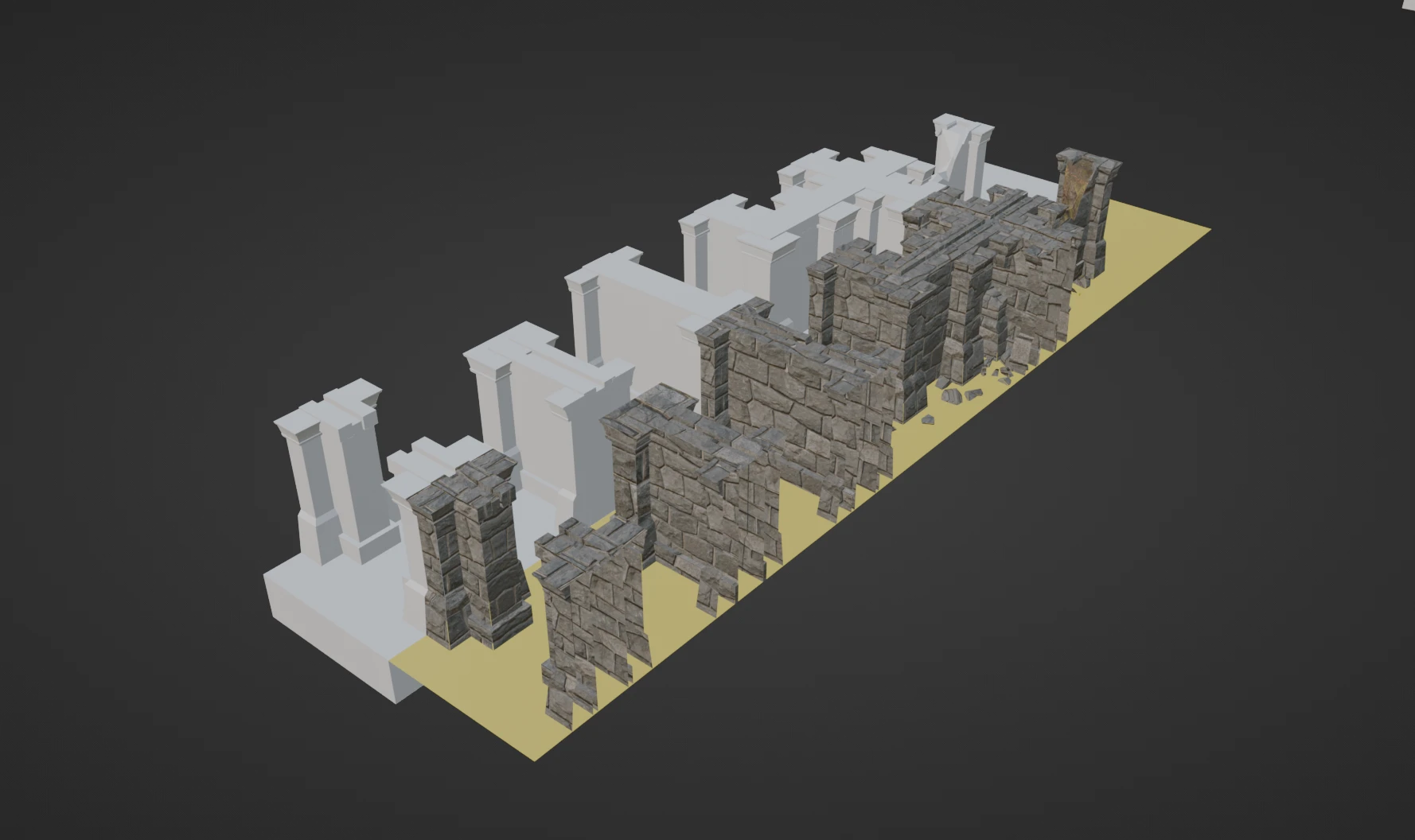
We ended up with 18 unique tiles. The hard part was configuring the neighboring tile relationships - each tile needed to know which other tiles could be adjacent to it. For example, a vertical wall could have another vertical wall, a vertical doorway, a vertical cap, two different corners, or an intersection tile as neighbors. Joel created a bidirectional linking system that automatically updated neighbor relationships, which quartered the time needed for this tedious process.
Tile Mesh Implementation
After getting the level generation functional with blockout meshes, I passed them to our 3D artist who turned them into textured sandstone walls that seamlessly flow into each other. I QA’d and implemented them into the engine, creating custom optimized colliders (shown in white).
Characters
I coded the logic for all characters using Node Canvas, a finite state machine asset. This was my first time using FSMs in a jam environment, and it made it easy to compartmentalize and visualize the logic.
Player Character
The first thing I created was the movement logic, which later evolved with dodging, attacking, and animations. The standout mechanic is the Midas Touch - a melee attack that turns enemies into golden statues. These can be pawned for gold coins to buy upgrades. However, overly greedy behavior can backfire, as the player themselves can be turned to gold in certain instances.
Enemies
I created 3 unique enemy variants with distinct behaviors:
- Locust - Jumps around and attacks in melee range
- Scorpion - Ranged attacks and powerful sting
- Snake - Can sense the player through walls
Another team member created the models, while I handled rigging, animating, and implementing them with FSM logic.
Final Boss
For the first time in a jam, I created a boss encounter! I made an intro cutscene and implemented 4 attack methods using FSMs:
- Melee Fast - 2 swift wide arc attacks, low damage
- Melee Strong - Overhead attack, high damage
- Charge - Gap closer, low damage
- Coin Toss - Shotgun-like projectiles, medium damage
More details about the boss and endings below.
Narrative Design
This was my first attempt at narrative design for a game jam. In the opening sequence below, Gilly - a floating skeletal figure - approaches the player and bestows upon them the golden glove, a powerful artifact that can transmute living creatures into solid gold statues. This sets up the core gameplay loop and moral dilemma: the glove grants immense power and wealth, but using it comes at a cost. The abuse of this power carries consequences that aren’t immediately obvious.
Creating Gilly
I modeled Gilly on a whim in about 30 minutes early in the jam. Despite the quick turnaround, I knew this mysterious skeletal merchant would become central to the game’s narrative. His design evokes an otherworldly shopkeeper - floating, skeletal, with an unsettling charm that masks his true intentions. He operates a shop where players can sell their golden statues and purchase powerful upgrades, each transaction deepening their corruption.
The Minimap & Corruption
I created the minimap using an orthographic camera that tracks the player, showing their position in the randomly generated world. But the minimap also houses the corruption mechanic - as players turn enemies and miners into gold, sell statues, and buy upgrades, a red border grows around the minimap. More corruption = more power, but if it reaches 100%, the player faces an alternate ending where their greed literally consumes them.
Final Boss & Endings
The game’s conclusion varies dramatically based on the player’s choices throughout their journey. Your level of corruption determines which of three possible endings you’ll face.
Ozymandias - The Final Boss
Players with moderate corruption face Ozymandias, a gold-stricken giant alchemist corrupted by his own greed. This climactic battle features 5 unique attack patterns that test everything the player has learned. I designed and implemented all of his combat mechanics using finite state machines, creating a dynamic fight that shifts between aggressive melee strikes, ranged coin projectiles, and devastating area attacks. Defeating Ozymandias grants one of three endings based on your corruption level - each offering a different reflection on the cost of greed.
The Corruption Ending
If corruption reaches 100%, you never face Ozymandias at all. Instead, Gilly intercepts you with praise for fully embracing greed. But this “victory” is hollow - in a scripted cutscene, the player’s overwhelming avarice compels them to use the golden glove on Gilly himself. The tables turn as the player transforms into gold, consumed by the very power they sought to master. This ending serves as a cautionary tale: unchecked greed doesn’t lead to triumph, but to self-destruction.
Visual Direction
I was solely responsible for the artistic direction of the game. Over the two-week development period, I established a cohesive visual aesthetic that combined multiple rendering techniques and environmental effects to create a gritty, atmospheric experience.
ProPixelizer Shader
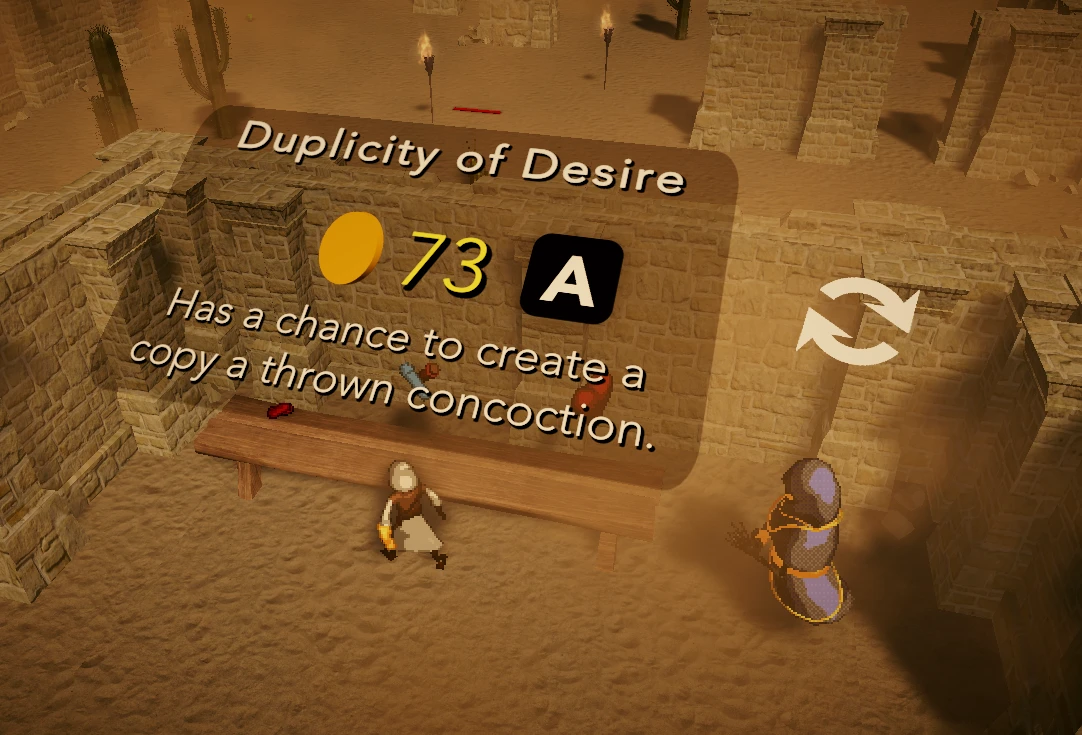
The game uses a mix of PBR shading for the static environment and ProPixelizer for dynamic elements like characters, pickuppables, and projectiles. This dual approach gave the game a distinctive pixelated aesthetic while clearly differentiating interactive objects from the background geometry.
Dense Dust Particles
Dense dust particles are strategically placed along the edges of the procedurally generated map to clearly communicate impassable terrain boundaries. This visual cue helps players understand the playable space without breaking immersion, using environmental storytelling to mark where the dungeon walls meet the endless desert beyond.
Sparse Dust Particles
In more open areas, sparse dust particles drift lazily through the air, creating a sense of scale and atmosphere without overwhelming the player. These lighter particle effects help maintain visual clarity during combat while still reinforcing the desert setting.
Asset Management
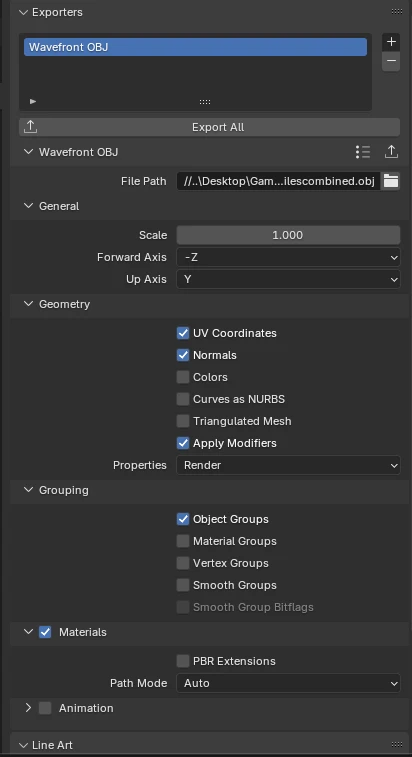
I used Blender 4.2’s collection export feature to export 3D assets in bulk. This created a highly iterative workflow where the bridge between Blender and Unity was just one click. While our dedicated 3D artist created most assets, I oversaw the process and implemented them into the game.
Testing & Balancing
I made nightly WebGL builds and pushed them to itch.io so the team could playtest. Later in the jam, when most mechanics were finished, I spent significant time balancing and fine-tuning gameplay for the smoothest experience possible.
Conclusion and Takeaways
It was a very ambitious jam where I wore a lot of hats. Despite being aware of the pitfall of overscoping, I still feel like we fell into it, as the game had to be shipped with a couple of game breaking bugs which were fixed later.
Another problem was a game design failure - many people didn’t really get the core mechanic of the golden glove. This issue could have been avoided if we included an interactive tutorial. Clarity overall suffered, despite adding a detailed minimap and an instruction popup when pressing TAB.